From Pōhaturoa to the Present 186 Years of Te Tiriti
While Waitangi Day is marked nationally on 6 February, for Ngāti Awa, June carries its own significance in relation to Te Tiriti o Waitangi. Te Tiriti was brought to Whakatāne and signed by Ngāti Awa rangatira on 16 June 1840, grounding this history within the rohe and whakapapa of Ngāti Awa.
To acknowledge this significant moment, we share a thought piece by Natalie Coates, a member of Te Mana Whakahaere o Te Whare Wānanga o Awanuiārangi. Natalie brings extensive expertise in Te Tiriti o Waitangi, tikanga Māori and the law, and offers a thoughtful reflection on the enduring relevance of Te Tiriti for Ngāti Awa and Aotearoa today.
One hundred and eighty-six years ago, a sheet of paper arrived in Whakatāne.
Today we know it as the Fedarb sheet, one of several copies of Te Tiriti o Waitangi carried throughout Aotearoa in 1840 to gather the signatures of rangatira. Named after Crown official Henry Fedarb, it would become the copy upon which twelve Ngāti Awa rangatira affixed their names on 16 June 1840. Tautari, Mōkai, Mato,Tarawatewate, Tūnui, Taupiri, Haukākawa, Pīariari, Matatēhokia, Rewa, Tūpara and Mōkai Teina each signed on behalf of their own people and communities.
Those signatures did not represent every hapū of Ngāti Awa. Yet they remain profoundly significant. They reflected a willingness of our tūpuna to enter into a relationship with the Crown based on mutual obligation and the promise that rangatiratanga would be respected. The tragedy of our history is not that our tūpuna misunderstood Te Tiriti. It is that the Crown failed to honour it. The history that followed tells a painful story.
Ngāti Awa experienced some of the most serious and enduring breaches of Te Tiriti in Aotearoa. Following the conflicts of the 1860s, the Crown unjustly declared Ngāti Awa to be rebels and, in 1866, confiscated approximately 245,000 acres of Ngāti Awa land through raupatu. The loss of whenua devastated our people. It undermined our economic base, weakened our social structures, diminished our ability to exercise authority within our own rohe, and cast a shadow that continues to be felt across generations.
For much of New Zealand's history, Te Tiriti itself was denied, marginalised, or ignored by successive governments. The promises made to our tūpuna were not merely breached - they were often treated as though they never existed. Yet despite this, Ngāti Awa never relinquished its commitment to seeking justice and ensuring that the promise of Te Tiriti would one day be honoured. Generation after generation carried the grievances of raupatu and Crown wrongdoing, refusing to allow the truth of our history to be forgotten.
That determination found expression through the Waitangi Tribunal process. In 1987, Ngāti Awa lodged the Wai 46 claim, seeking recognition of the injustices arising from raupatu and other Crown breaches of Te Tiriti. After years of hearings and evidence, the Waitangi Tribunal released the Ngāti Awa Raupatu Report in 1999. Its findings confirmed what our people had always known: that the Crown had committed serious breaches of Te Tiriti and caused significant prejudice to Ngāti Awa. The Tribunal established an authoritative record of that injustice and helped lay the foundation for redress.
That work culminated in the Ngāti Awa settlement. In 2003, Ngāti Awa and the Crown signed a Deed of Settlement, and in 2005 Parliament enacted the Ngāti Awa Claims Settlement Act. Central to that journey was the determined leadership, persistence and vision of Tā Hirini Moko Mead. Through his wisdom, scholarship and unwavering commitment to our people, he helped guide Ngāti Awa through one of the most significant periods in our modern history. Moe mai rā e koro.
The settlement was intended to be more than the resolution of historical grievances. It was meant to herald a new era in the Treaty relationship between Ngāti Awa and the Crown - one founded not on grievance and denial, but on partnership, mutual respect, and a shared commitment to a better future. Today, however, we find ourselves once again confronted with questions about the place of Te Tiriti within our nation.
Last week, I sat before the Waitangi Tribunal to give expert evidence in its urgent inquiry into proposals by this Government to remove or weaken nineteen Treaty clauses contained within legislation. Treaty clauses are often the practical mechanisms through which the promises and principles of Te Tiriti are given effect in law. The legislation affected spans some of the areas where Māori continue to experience the greatest inequities - education, climate, criminal justice, health, and data governance.
At first glance, the proposed changes might appear technical - they are not. Instead of requiring that Te Tiriti is "honoured", "upheld", or "given effect to" the proposal is that the language be weakened to only take Tiriti "into account". That transforms a constitutional commitment into something a decision-maker only has to acknowledge and can then discard. The consequences of that shift will be profound. During the inquiry, I heard evidence that in the health sector this change will have a direct and, in some cases lethal, flow-on effect for Māori communities. When viewed in that light, these proposals are not simply about statutory wording. They are about our lives, our wellbeing and the very real impact that guarantees of Te Tiriti has on them.
As I listened to that evidence, I could not help but reflect on the journey that brought us here. From the signing in Whakatane. To the raupatu. To generations of petitions and protest. To the Waitangi Tribunal. To settlement. To an apology that was meant to usher in a new era. And yet here we are once again debating whether the promises of Te Tiriti should continue to have practical effect in the laws of this country.
What does all this tell us?
It tells us that Te Tiriti is not simply history. It remains relevant because it speaks to the fundamental question of how Māori and the Crown are to live together in this country. It reminds us that progress is never permanent and that hard won gains can be weakened within a single election cycle. It tells us that remembrance alone is not enough. Our responsibility is not simply to commemorate Te Tiriti and its signing, but to uphold it. As we mark 186 years since those rangatira gathered in Whakatane, the lesson for our generation is clear: me whawhai tonu mātou. Not because we seek conflict or because we are trapped in the past but because every generation inherits a responsibility to protect what matters. The names on the Fedarb sheet are more than signatures. They are a reminder of promises made and obligations accepted. The work of honouring Te Tiriti did not end with settlement or end with an apology. It remains the work of our time. And it is now ours to continue.

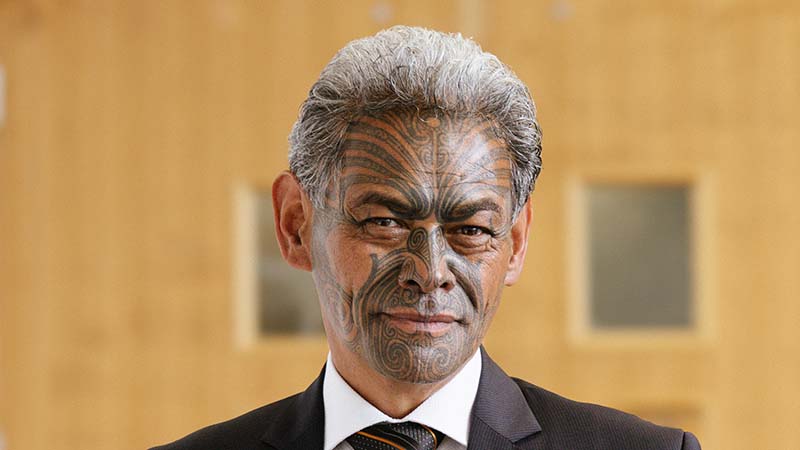
Ms Natalie Coates (pictured) is a barrister and a lecturer and council member of Te Whare Wānanga o Awanuiārangi
Whakapā mai/Contact us
For enquiries related to this article please contact us
Hope Rolleston
- Phone: 027 236 6316
- Email: hope.rolleston@wananga.ac.nz
Related News

Awanuiārangi doctoral research selected for national applied doctorates scheme
Published date : Mon, 27 July 2026 12:20 pmTe Whare Wānanga o Awanuiārangi has been selected for the second annual call of the Applied Doctorates Scheme (ADS), recognising the strength of its doctoral programme and its leadership in kaupapa Māori research.
Awanuiārangi scholar recognised in King’s Birthday Honours
Published date : Mon, 15 June 2026 12:32 pmWe are proud to celebrate the appointment of Dr Reuben Tūwhakahekeao Collier as a Companion of the New Zealand Order of Merit (CNZM) in the 2026 King’s Birthday Honours, recognising his significant and sustained contribution to Māori and education.

Kua hinga te toki tangatanga i te rā - Tā Hirini Moko Mead
Published date : Sat, 30 May 2026 12:57 pmHikohiko te uirā, papā te whaitiri ki runga i ngā awa ararau ō Tarawera, ō Te Awa o Te Atua, ō Rangitāiki, o Orini, o Whakatāne. Ka kūtia ka wherahia ngā toka tipua o Te Paepae ō Aotea, ko koe tēnā e Koro Hirini Mokohaerewa Mead.
Graduation 2026
Published date : Mon, 04 May 2026 02:01 pmTe Whare Wānanga o Awanuiārangi celebrated the hard work and dedication of its tauira, marking another successful graduation with over 2,000 qualifications conferred.