Ko te pūtake Matua o te rangahau, Whakaora Taiao, Whakaora Whenua
Climate change presents profound challenges for Māori communities, threatening treasured wāhi tapu sites, cultural heritage, and intergenerational knowledge systems. Whakaora Taiao, Whakaora Whenua advances a Māori-led approach to natural hazards resilience by weaving together mātauranga Māori, Indigenous methodologies, and contemporary science.
Guided by kaitiakitanga, whakapapa, and whakawhanaungatanga, the project strengthens the adaptive capacity of whānau, hapū, iwi, marae, and communities while nurturing enduring partnerships, research capability, and innovative pathways for climate adaptation across Aotearoa New Zealand.
The objective of this research is about integrating Indigenous knowledge for Natural Hazard Resilience that will form the framework of the Post-Doctoral Fellowship of Rev Dr Hone Te Rire. This research focuses on the interrelationship between te reo, cultural identity, and scripture as a foundation for community resilience in the face of environmental risk.
Five key points focus on an indigenous, cultural view of Natural Hazards and Reo Resilience:
- Tipuna Landscapes: Cultural Memory at Risk
- Te Whenua Korowai: Revitalising Ecological Intelligence
- Mana Whenua, Mana Tikanga: Restoring Customary Jurisdiction
- Nga Reo o te Taiao: Protecting Linguistic-Ecological Memory
- Te Aho Tapu: Weaving a Dual-Knowledge Post-Doctoral Fellowship PhD Pathway
Arotakenga Pukapuka kua Tāia, kāre anō kia Tāia
Climate change severely impacts whenua by threatening biodiversity, water resources, agriculture, and cultural heritage sites, disproportionately affecting Māori communities due to their deep connection to the land and their common location in vulnerable coastal and rural areas. Impacts include increased flooding, erosion, and habitat loss, which disrupt culturally significant practices and economic activities. Addressing these issues requires Māori-led adaptation strategies, incorporating mātauranga Māori and ensuring equitable participation in climate action to uphold Te Tiriti o Waitangi rights.
Key Impacts
- Threat to cultural sites: Marae, urupā, and other sites of cultural significance are vulnerable to rising sea levels and increased flooding.
- Ecological and biodiversity disruption: Changes in temperature and precipitation threaten native flora and fauna, impacting taonga and the overall health of ecosystems.
- Food security and customary practices: Disrupted seasonal patterns and habitat changes affect the customary harvesting of mahinga kai and species, impacting food security and traditional practices.
- Social and personal impacts: Māori communities face isolation from extreme weather events, with risks to infrastructure and access to essential services.
Māori Response & Solutions
Kaitiakitanga: The principle of kaitiakitanga is central to protecting the whenua and informing sustainable environmental management practices.
Mātauranga Māori: Incorporating traditional knowledge, values, and worldviews into climate adaptation strategies is crucial for effective and culturally appropriate decision-making.
Adaptive strategies: Iwi/hapū are developing strategies to adapt to climate change, including divesting from risky assets, and adopting new practices in agriculture and resource management.
(Bishara, S., Mika, Jason Paul., Climate Change and Whenua Māori, a management perspective. MAI Journal, Volume 14, Issue 1, 2025).
This research is funded by The Natural Hazards and Resilience Platform.
Activities
Climate Change Summit 2025: https://www.wananga.ac.nz/news-and-events/news/climate-change-summit-2025/
Collaborators
Professor Taiarahia Black
Rev Dr Hone Te Rire
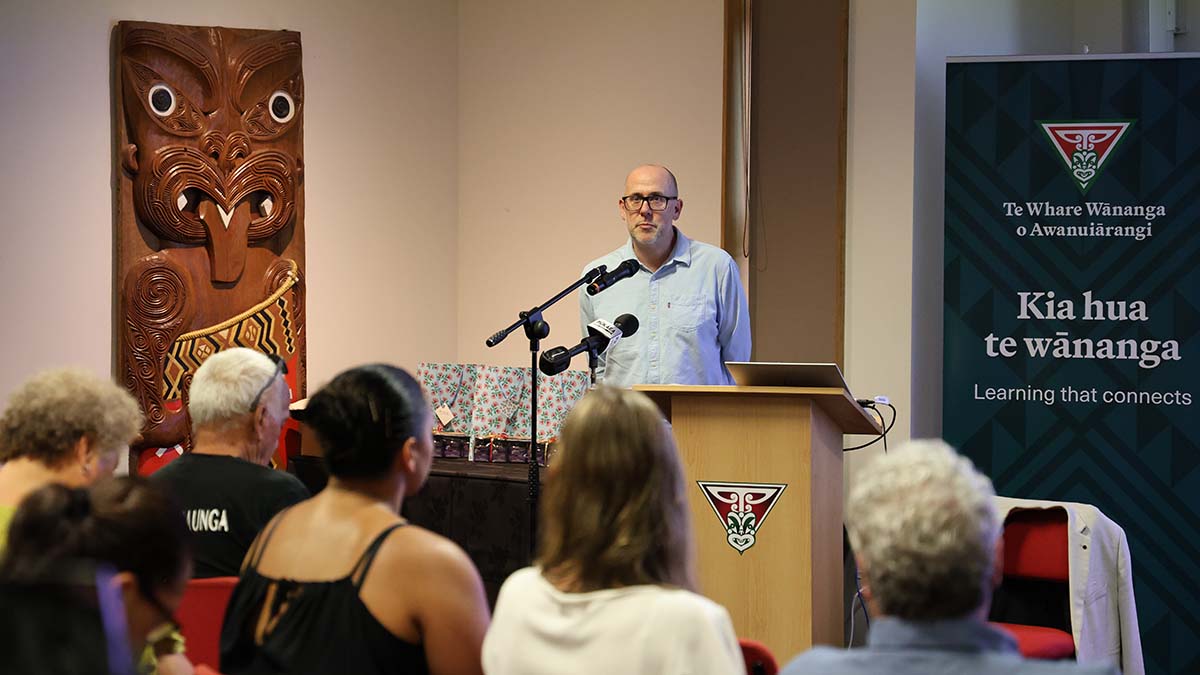
Dr Chris Massey shares critical data insights to be considered for climate change responses

Professor Taiarahia Black

Rev. Dr Hone Te Rire

This research is funded by The Natural Hazards and Resilience Platform.
Whakapā mai/contact us
For enquiries related to this research project please contact us